
Meaning of Time Series Analysis
Time series analysis is a statistical technique used to study, analyze, and interpret data collected sequentially over time in order to identify patterns, relationships, and underlying structures in the data. The main objective of time series analysis is to understand past behavior and forecast future values for decision-making purposes.
In time series, observations are arranged in chronological order, such as daily sales, monthly production, or annual profits. The analysis focuses on identifying components such as trend, seasonal variations, cyclical variations, and irregular movements. By isolating these components, analysts can explain changes in data and make reliable forecasts.
Time series analysis is widely applied in business, economics, finance, manufacturing, and population studies to support planning, control, and policy formulation.
Objectives of Time Series Analysis
The main objectives of time series analysis include:
- To identify and measure patterns and movements in data over time
- To explain past behavior of a variable
- To forecast future values
- To support business and economic decision-making
- To reduce uncertainty in planning and control
Skills and Competencies Required to Understand Time Series.
- A sound understanding of basic statistics is essential. This includes measures of central tendency, measures of dispersion, correlation, and probability concepts. Statistical knowledge enables correct interpretation of time series data and results.
- Time series involves calculations using algebra and basic calculus concepts. Mathematical skills are necessary for understanding formulas, computing averages, indices, and applying forecasting models.
- The ability to analyze and interpret numerical data is critical. This skill helps in identifying trends, seasonal patterns, and irregular movements, as well as drawing meaningful conclusions from time series results.
- Understanding time series requires the ability to present data graphically using line graphs and charts. Visualization skills help in recognizing patterns, fluctuations, and turning points in data.
- Competence in various forecasting methods such as moving averages, exponential smoothing, trend projection, and regression analysis is necessary. These techniques help in predicting future values based on past data.
- Time series analysis requires logical reasoning and critical thinking. Analysts must choose appropriate models, evaluate assumptions, and assess the reliability of forecasts.
- Modern time series relies heavily on statistical software and spreadsheet applications. Skills in tools such as spreadsheets and statistical packages improve efficiency, accuracy, and presentation of results.
Accuracy is essential in time series. Small errors in data entry or calculations can lead to incorrect conclusions. Attention to detail ensures reliable analysis
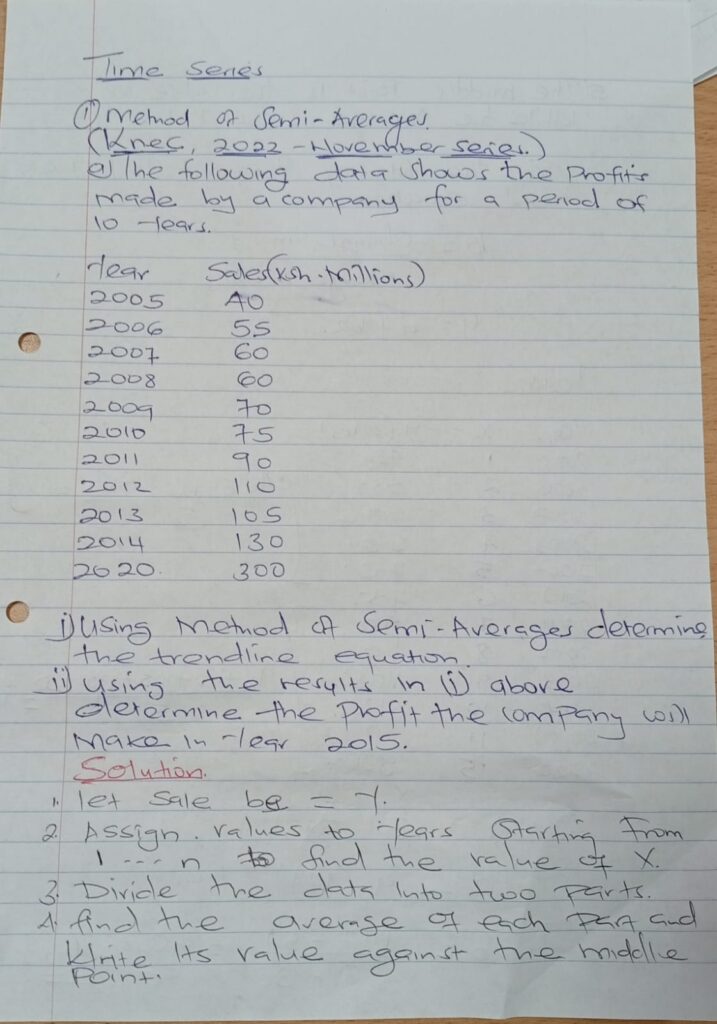
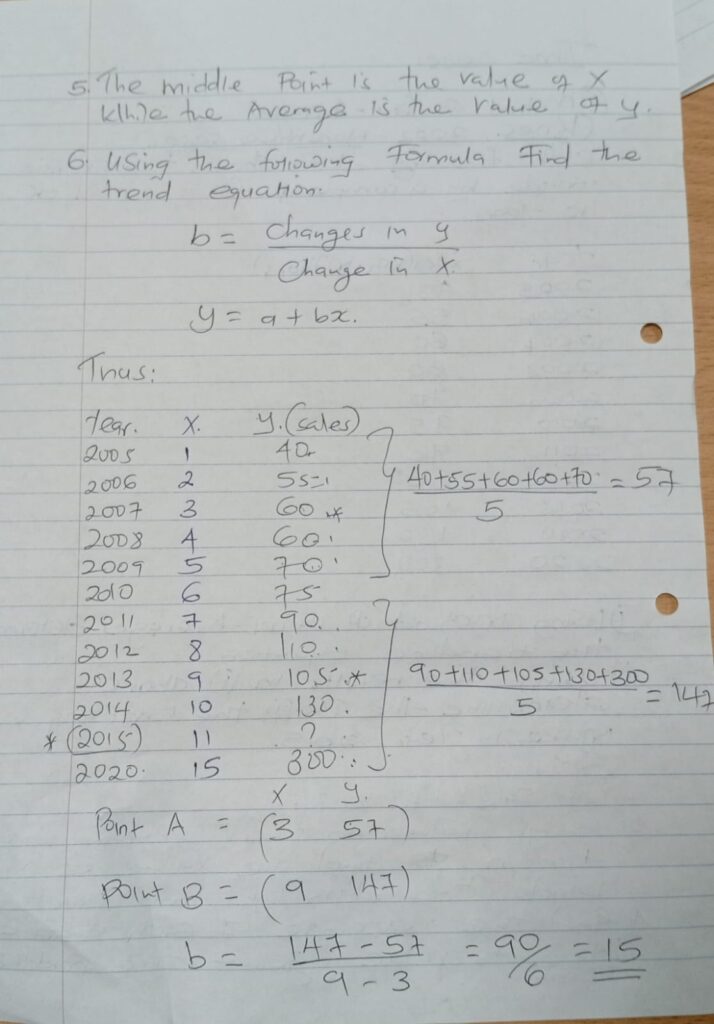
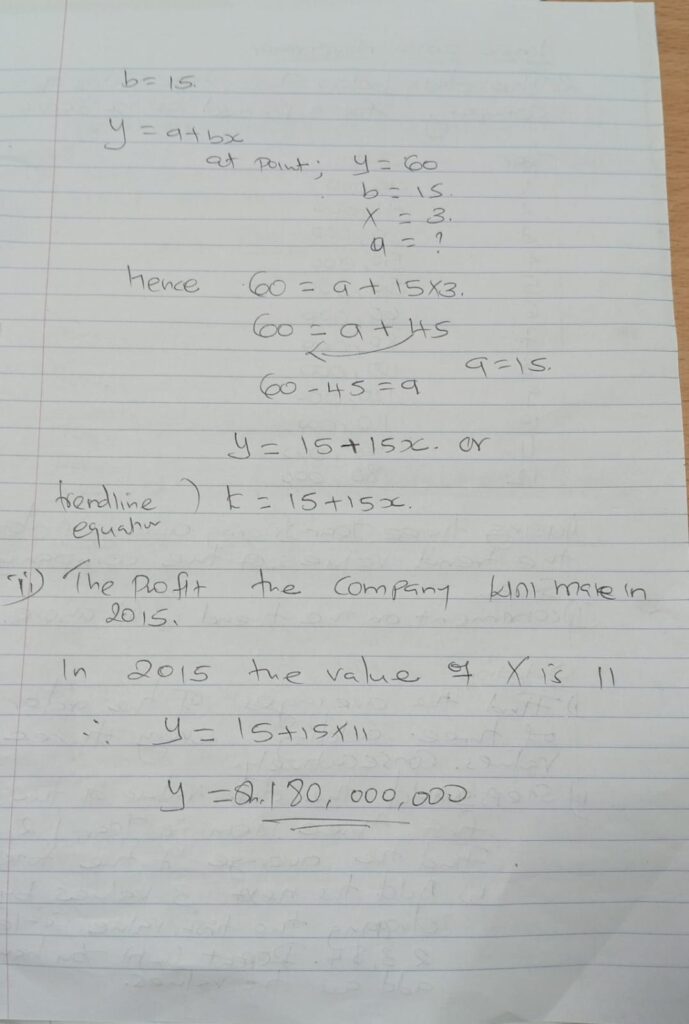
Examples of solved time series problems
For more about time series check our new EBOOK